


The machinery fleets of many Italian metalworking workshops are several years old. Press feeding lines, straightening machines and coiling machines still function well structurally, but are no longer able to interface with modern monitoring systems, struggle to comply with the latest safety regulations, or simply cannot find spare parts for their electronic components.
Faced with this situation, companies have three options: to buy new machinery, to carry out a revamp, or to opt for a retrofit solution. The first two options involve significant investment; the third is often the one offering the best value for money. But what exactly is the difference between a retrofit and a revamp? And what do interventions of this kind actually involve?
What is a retrofit and when does it make sense to carry one out
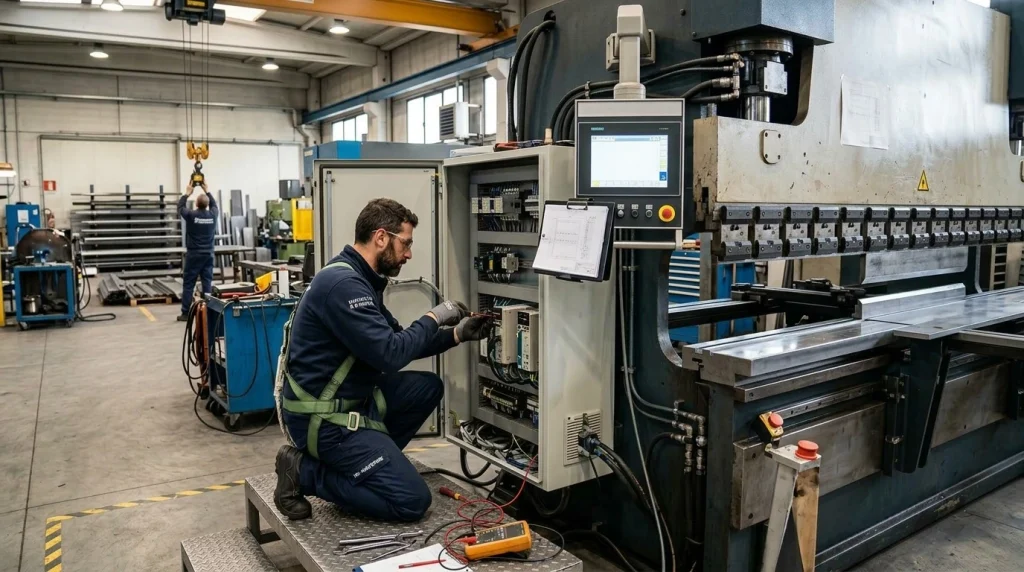
A retrofit is a targeted intervention that updates the operation of an existing machine without replacing it. It does not just concern the electronics: it also involves refurbishing the worn mechanical parts necessary for the new control system to function correctly, whilst leaving the machine’s basic structure and original functions unchanged.
It is the ideal solution when the plant is still structurally sound, but its electronic ‘brain’ is now outdated or difficult to maintain.
The 5 signs that indicate it is time for a retrofit
- The machinery is in good condition, but the electronics are not. The machine still operates with acceptable precision, but the control panel dates from a bygone technological era and is no longer supported
- Spare parts and support for the electronic components are no longer available. The original suppliers of PLCs, drives and inverters either no longer exist or discontinued that product line years ago
- The machine cannot be connected to monitoring systems or an MES. Production needs to be digitised, but the current system is not compatible with any modern supervision system
- The costs of machine downtime and unscheduled maintenance are rising every year. Each breakdown requires increasingly complex repairs, with longer waiting times for spare parts
- You need to bring the system into line with current safety regulations. Machinery directives have evolved over time, and the original plant no longer fully complies with them, posing risks even in the event of an inspection
If you recognise at least two or three of these signs, a retrofit is almost certainly the most efficient solution.
How a retrofit works in practice
One of the most common misconceptions is to think of a retrofit as simply replacing an electrical control panel. In reality, it is a complex process, divided into two main areas of work: mechanical and electronic.
Mechanical work
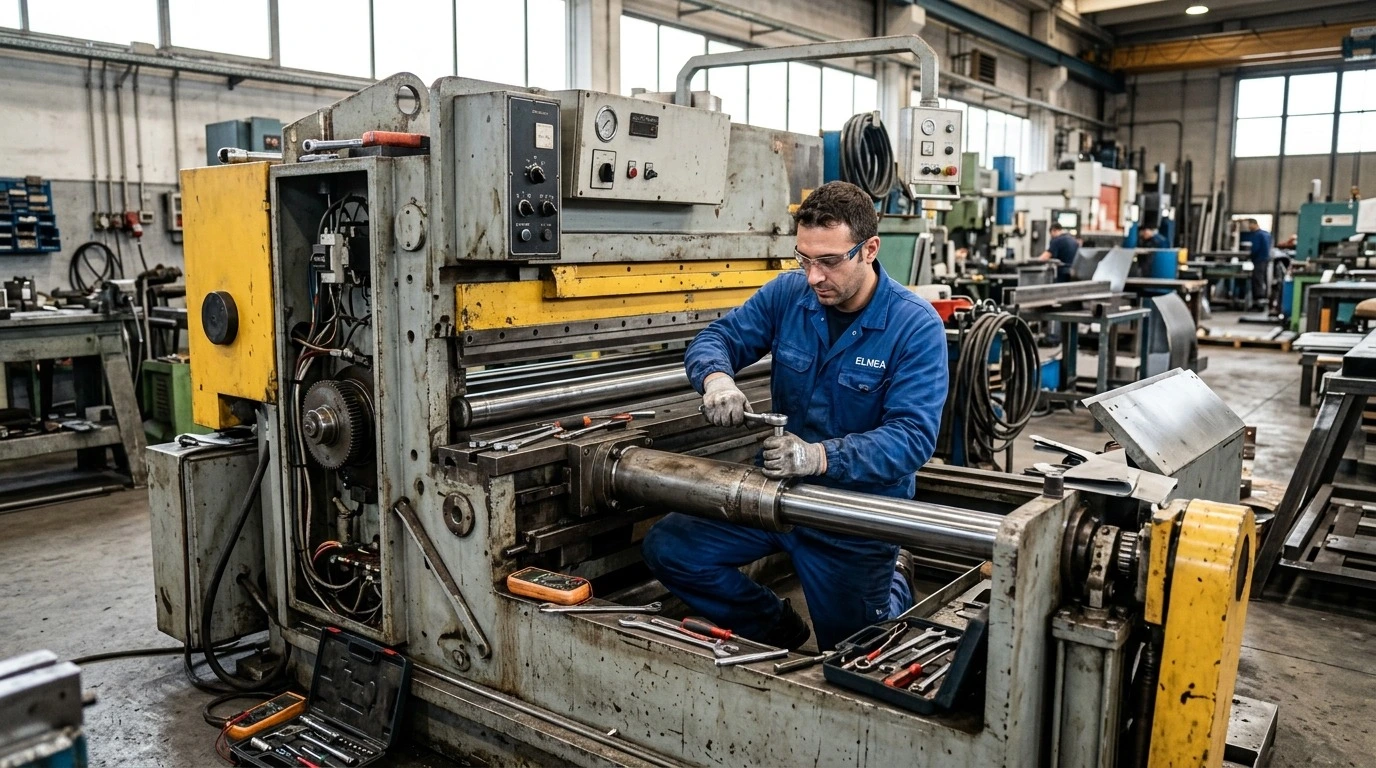
Before any work is carried out on the electronics, the machinery is completely dismantled and cleaned of oil, grease and machining residues that have built up over the years, and the metalwork is repainted. At this stage, the actual overhaul of worn mechanical components begins, with the work varying depending on the type of machine.
On straightening machines and electronic feeders, for example, typical work involves the transmission gears, the grinding or replacement of rollers, the pneumatic and hydraulic systems, the oil and air valves, bearings and seals. On decoilers and rewinders, in addition to the gears and the pneumatic and hydraulic systems, a critical aspect is often the complete overhaul of the self-centring mandrel, a component which, as it wears, loses its ability to centre the coil accurately.
The electronic components
At the same time, when the electrical system is obsolete, it is completely replaced with components that comply with current regulations: updated control panels and switchboards with push-button panels, motors and brushless motors, new-generation drives and inverters, and on-machine wiring using certified cables. It is this step that makes the machinery compatible with the connectivity required by Industry 4.0, paving the way for the associated tax incentives.
Final testing
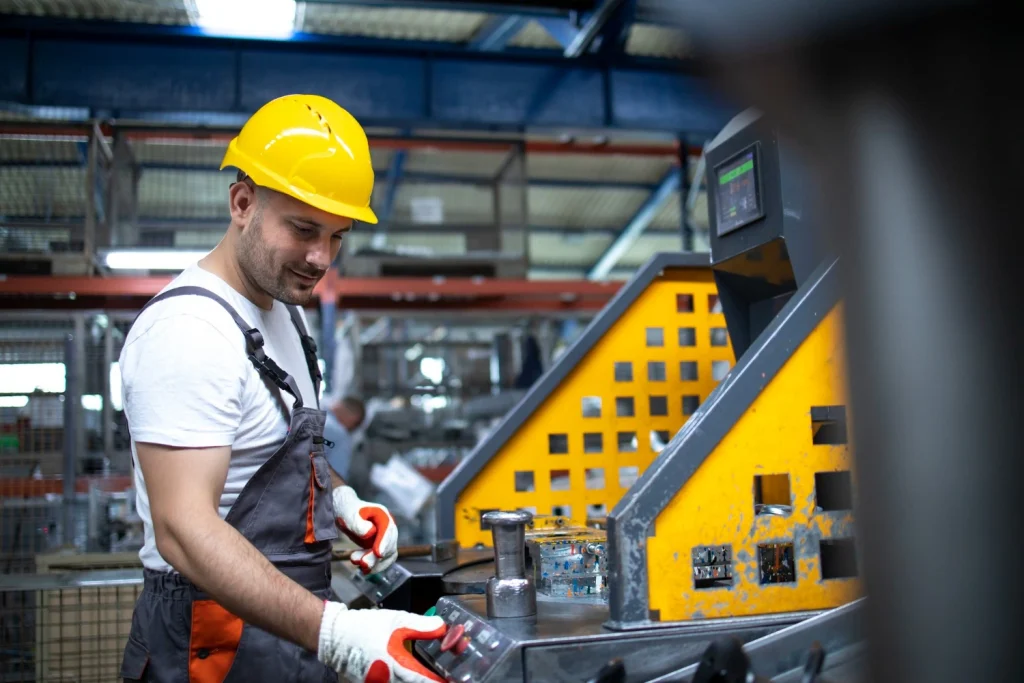
A complete retrofit project concludes with mechanical and electronic testing of the entire machine. Upon completion, if the work has substantially altered the system, a new EC ‘Partly Assembled Machine’ certificate is issued: a detail that is often underestimated, but which, from a regulatory perspective, makes a huge difference compared to an ‘informal’ upgrade without supporting documentation.
What is Revamping and what does it involve
Revamping shares with retrofitting the aim of bringing outdated machinery back into operation, but it goes further. It is not limited to restoring the machine to its original operating condition: it involves more radical changes to the structure, often for reasons that simple restoration cannot resolve.
Tangible operational benefits
Motorisation eliminates repetitive movements and excessive strain. The operator maintains visual control of the material at all times without exposing themselves to physical risks. There are several positive outcomes:
Revamping is the right choice when:
- Mechanical wear is so extensive that simply overhauling the components (chassis, load-bearing structures, compromised transmission systems) is insufficient
- You wish to increase the machine’s performance beyond the original specifications (line speed, precision, production capacity), which often requires structural modifications rather than just electronic ones
- The machinery has suffered damage or been subjected to improper modifications over time, which have permanently compromised its reliability
In summary: a retrofit updates and restores the machine whilst keeping it true to its original form; revamping transforms it to make it perform better.
Retrofit vs revamping: the differences at a glance
| RETROFIT | REVAMPING | |
| SCOPE OF WORK | Electronics + mechanical refurbishment of worn components | Electronics + structural/performance modifications |
| REQUIRED INITIAL CONDITION | Load-bearing structure still sound | Structure requiring modification or reinforcement |
| MAIN OBJECTIVE | Digitalisation, Industry 4.0/5.0 compatibility, regulatory compliance | Performance exceeding original specifications |
| INVESTMENT | Moderate | Medium to high |
| PLANT DOWNTIME | Reduced, often on-site | More extensive |
| SUITABLE FOR | Machines that are structurally sound but technologically outdated | Machines that are heavily worn or need to be pushed beyond their original limits |
Here is a checklist to help you choose
Before making a decision, it is worth answering these questions:
- Are the load-bearing structure and the main mechanical components still reliable, allowing for normal wear and tear?
- Is the main objective to digitise or bring the machine up to standard, or do you also need to significantly improve its performance?
- What is the available budget compared to the cost of an equivalent new machine?
- How much production downtime can you afford, and can the work be carried out on-site or does it require the machine to be transported to a workshop?
A preliminary technical assessment of the system, either through an on-site inspection or by sending the machine to a workshop, remains the most reliable way to determine the best course of action: every machine has a different history and level of wear and tear, and this assessment also forms the basis for the quotation for the work.
Find out more about Elmea’s retrofitting service or request a quote directly from our technical team.
READ MORE: