


The handling and storage of coils are two of the most critical operations in metalworking workshops. These enormous rolls of sheet metal, which can weigh between 7 and 15 tonnes, require strict procedures to prevent the load from tipping over, damage to materials and serious injuries to workers.
In 2026, safety regulations are even stricter: Legislative Decree 81/2008 and the INAIL guidelines set out specific standards that companies must comply with.
This guide explores how to handle coils safely and efficiently, from lifting systems and automation technologies to best practices and innovative solutions designed to protect both the material and the workforce.
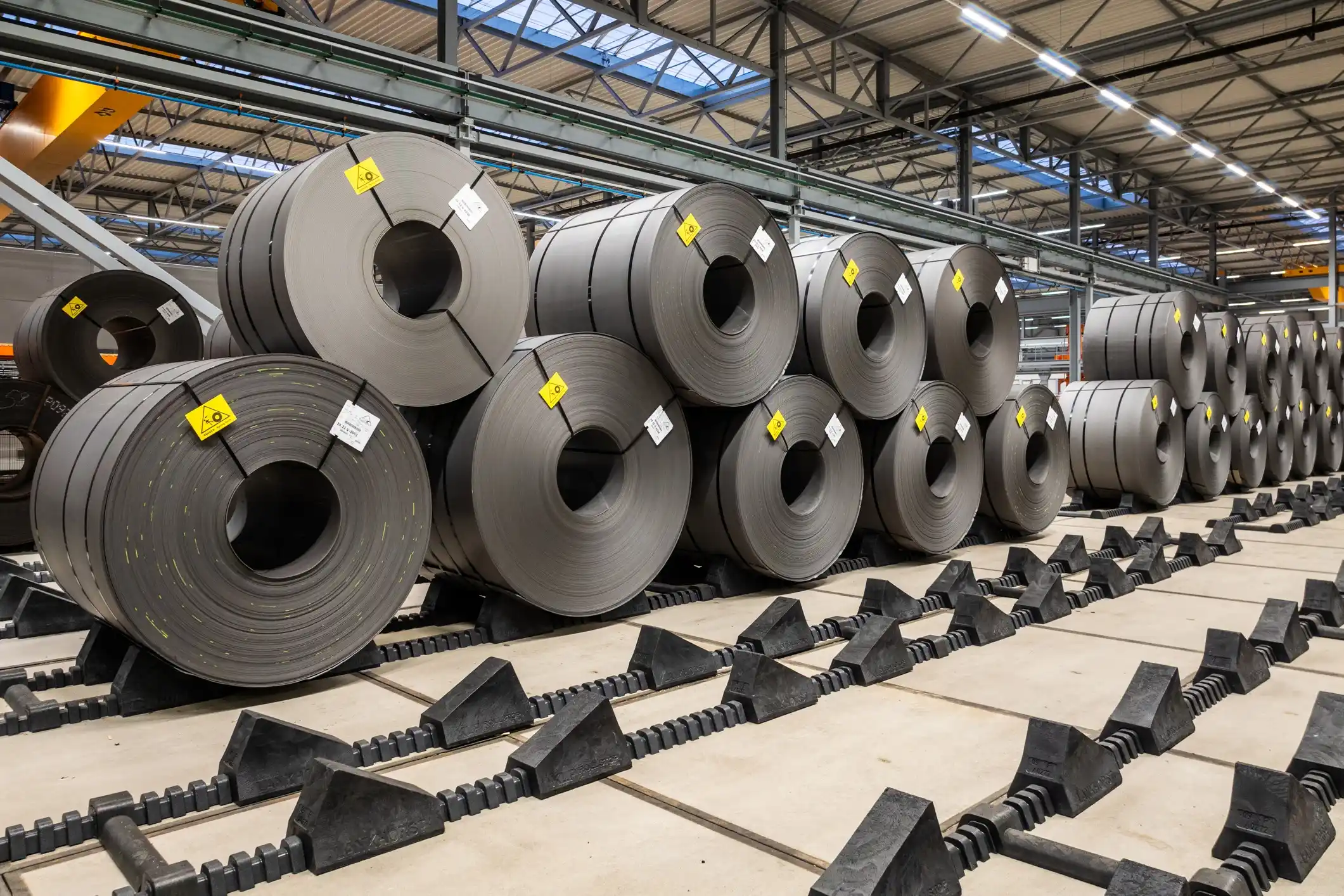
What are coils and what machinery is used to handle them?
A coil is a roll of coiled sheet metal, available in various materials (steel, aluminium, copper) and sizes. The internal diameter (mandrel) typically ranges from 400 to 500 mm, whilst the external diameter can exceed 2 metres. A single coil can weigh from a few quintals up to 15 tonnes. In the technical terminology of industrial sheet metal processing, there are two essential machines for handling coils:
- The decoiler (unwinder or reel) is positioned at the start of the production line; it supports the coil and unrolls it, feeding the sheet metal strip to the subsequent machines (e.g. presses, shearing machines, cutting lines). This is the first operational step that receives the raw coil on arrival
- The upcoiler is the machine that receives the processed material or continuous strip as it exits the production line and winds it into a compact coil, ready for storage or transport. It is used at the end of the line.
The logistics of handling coils begin the moment they arrive at the workshop and continue until the material is fed onto the production line. Correct handling is not just a matter of operational efficiency, but of safety. If a coil were to fall accidentally from a height of 1.5 metres, the impact would be sufficient to cause serious fractures or death. INAIL data show that around 15% of serious accidents in metalworking workshops involve the handling of heavy materials such as coils. This is why investing in safe handling and storage systems is not only a legal obligation but also a competitive advantage.
Handling coils: techniques, equipment and procedures
Handling coils requires specific equipment and defined procedures. Standard pallet trucks or generic lifting systems cannot be used. There is a risk of both damage to the material (oxidation, scratches, deformation of the sheet metal) and loss of control of the load, with potentially fatal consequences.
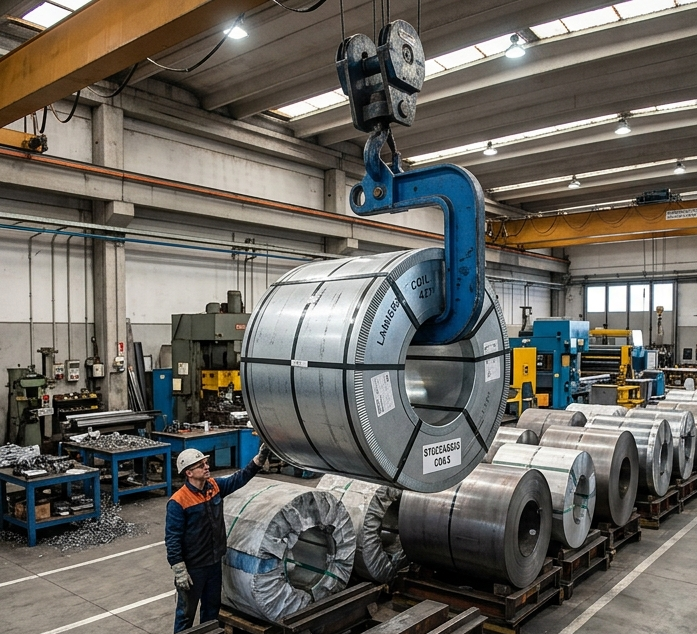
To lift coils safely, companies have a range of technical solutions at their disposal:
- C-hooks with counterweights, ideal for coils with a horizontal axis when using an overhead crane, distribute the load evenly, reducing sway
- Mechanical clamps and swivel hooks grip the coil through the central hole without damaging the surface; these are useful for vertical axes and rotations
- Lifting magnets allow ‘hands-free’ handling of ferrous materials, providing a secure grip without contamination
- Rotation systems (coil tilters) enable the axis to be changed from horizontal to vertical for feeding production lines
- Slinging straps and bands made from approved materials must be inspected periodically to prevent sudden breakage
The choice of equipment depends on the dimensions, weight, material and frequency of handling. A 10-tonne steel coil requires a different solution to a 3-tonne aluminium coil. A standard handling procedure reduces the risk of injury by 70–90%.
The procedure includes:
- Initial inspection to check the integrity of the coil and ensure there are no visible deformations
- Stable positioning of the lifting equipment with clear space around it and no people in the lifting area
- Slow and controlled lifting (maximum 0.5 m/s), keeping the coil at least 50 cm above the ground during transport
- Transport along the pre-determined route without making any sharp turns
- Gentle lowering of the coil onto the cradle or support
- Final check to verify correct positioning
- Locking of safety systems if motorised
Coil storage: systems, types and space optimisation
Coil storage is one of the greatest challenges in metalworking plants. Unlike other materials, coils cannot be stacked vertically at random, as the weight would crush the rolls at the bottom. The most common solution is storage across multiple horizontal levels using specialised support systems.
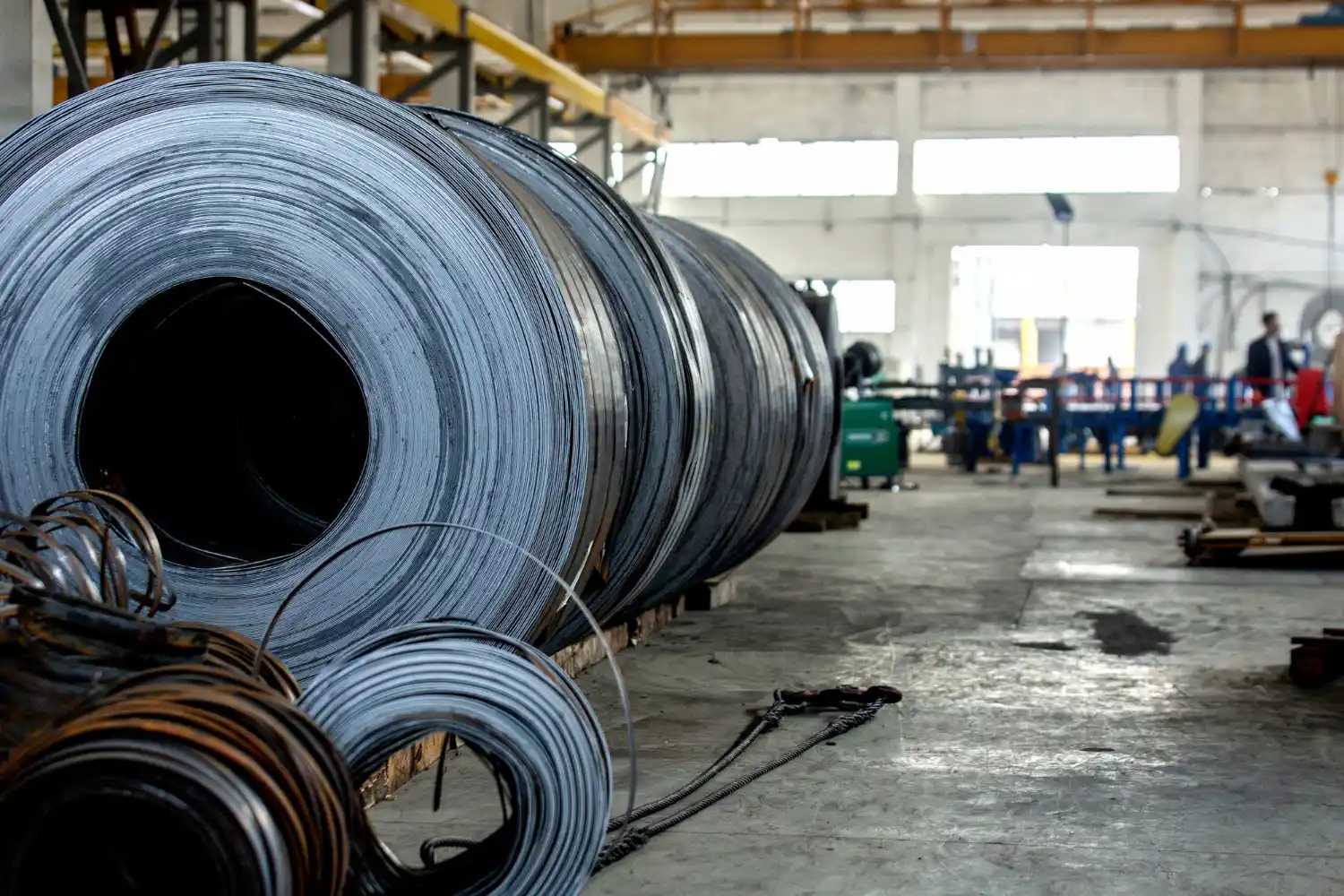
There are various types of storage depending on the space available and the frequency of retrieval:
Horizontal racking storage (recommended) involves placing the coils on horizontal beams, on supports known as cradles or storage saddles. This system is the safest as it ensures even load distribution, reduces the risk of tipping compared to random stacking, allows for easy retrieval of each coil without disturbing the others, and facilitates visual inspection.
Vertical racking (cantilever) storage is used when space is limited: the coils are positioned on arms without a central column, with a depth that must be at least 60% of the coil’s outer diameter to ensure stability.
Specialised containment systems are essential for safety. Shaped blocks (e.g. Coils Block), modular cradles, and storage saddles with coated profiles prevent accidental rolling and do not damage the material. Whichever solution is chosen, the floor surface must be level, stable and of certified load-bearing capacity. Stacking must never exceed three layers, and the largest coils must always be at the base, with the smaller ones on top. For coils stored vertically, always use suitable containers or pallets.
How to choose the right coil storage system for your workshop
The choice of storage system depends on four key factors:
- The volume of coils to be stored
- The rate of stock rotation (FIFO – first-in, first-out)
- The space available
- The investment budget
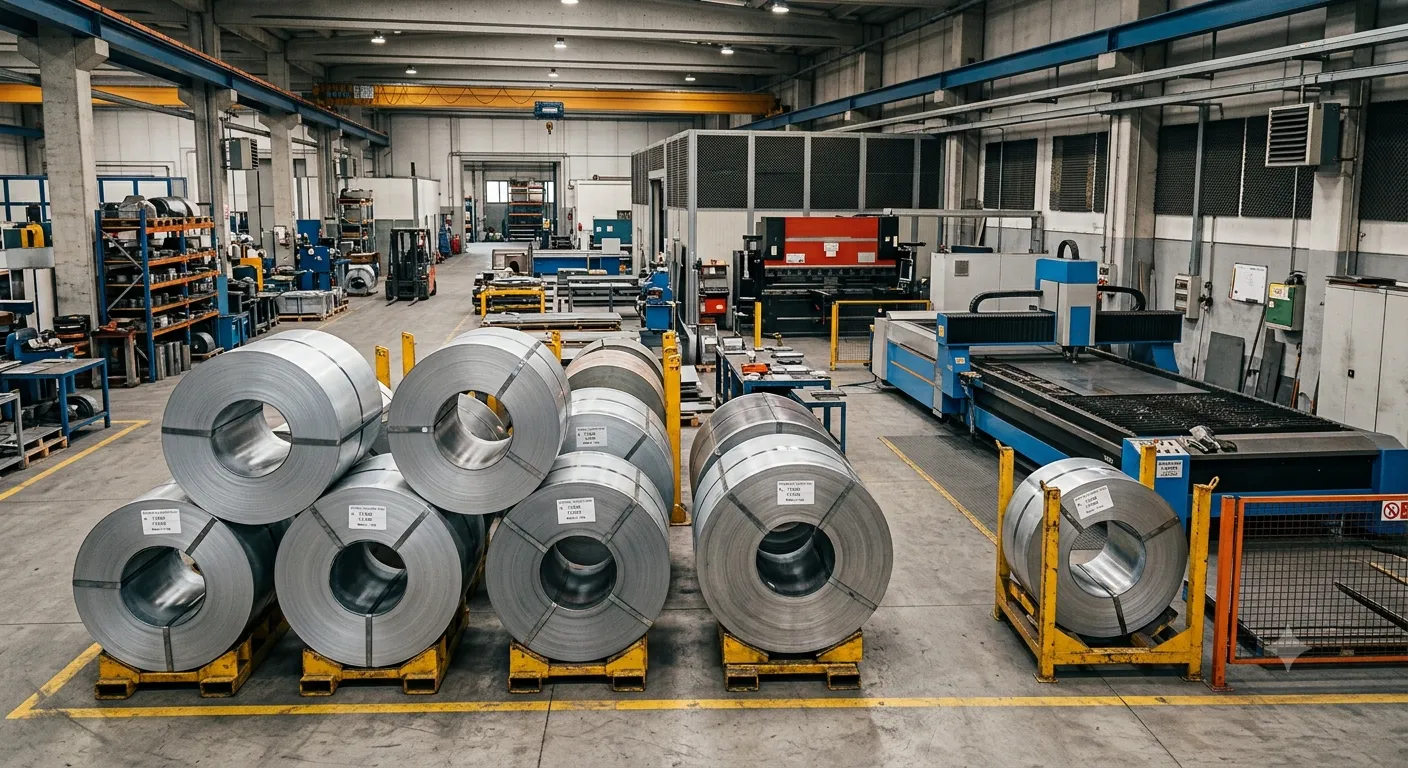
If your workshop receives 50–100 coils a month with low turnover, a traditional horizontal racking system with simple cradles is sufficient. If, on the other hand, you handle 300 or more coils a month and require rapid access, consider cantilever racking, which allows for picking without any additional movements. For very limited spaces, vertical modular systems reduce the floor space required by 40–50%. If, on the other hand, you are aiming for full automation, automated warehouse systems with motorised shuttles optimise space and reduce human error, although they require a higher initial investment.
Also consider maintenance costs: simple racking systems have very low maintenance costs, whilst automated systems require monthly preventative maintenance. At Elmea, we can help you design a bespoke solution that balances efficiency, safety and ROI.
Protecting coils from oxidation and rust
Coils are sensitive to humidity and environmental conditions. Unprotected steel rusts if the relative humidity exceeds 60%. Aluminium oxidises at levels above 70%. Copper and special alloys have even tighter tolerances. For this reason, the environmental conditions of the storage facility are just as important as the physical positioning of the material.
If the workshop does not have dedicated climate control, the coils must be stored with desiccant (silica gel in dedicated sachets) or under protective covers to prevent the build-up of condensation. Ideally, the warehouse should maintain a temperature of between 15–25°C and a relative humidity of between 40–60%. Temperatures below 5°C can cause brittleness in some aluminium alloys, whilst temperatures above 35°C accelerate oxidation.
One aspect that is often overlooked is ventilation. A coil warehouse must have a continuous flow of air to prevent ‘pockets’ of moisture and condensation. If a coil arrives from the cold outside into a warm warehouse, the sudden temperature change causes condensation to form on its surface. The solution is an air-conditioned buffer zone where the coils are allowed to acclimatise for 2–4 hours before final storage. Although this practice takes time, it drastically reduces problems with corrosion and damage to the material.
Coilers vs Upcoilers: differences, advantages and how to choose the right solution
In the technical terminology of the metalworking industry, the terms coilers and upcoilers refer to different functions, although they are often used interchangeably. Understanding the difference is important for choosing the right equipment for your production line.
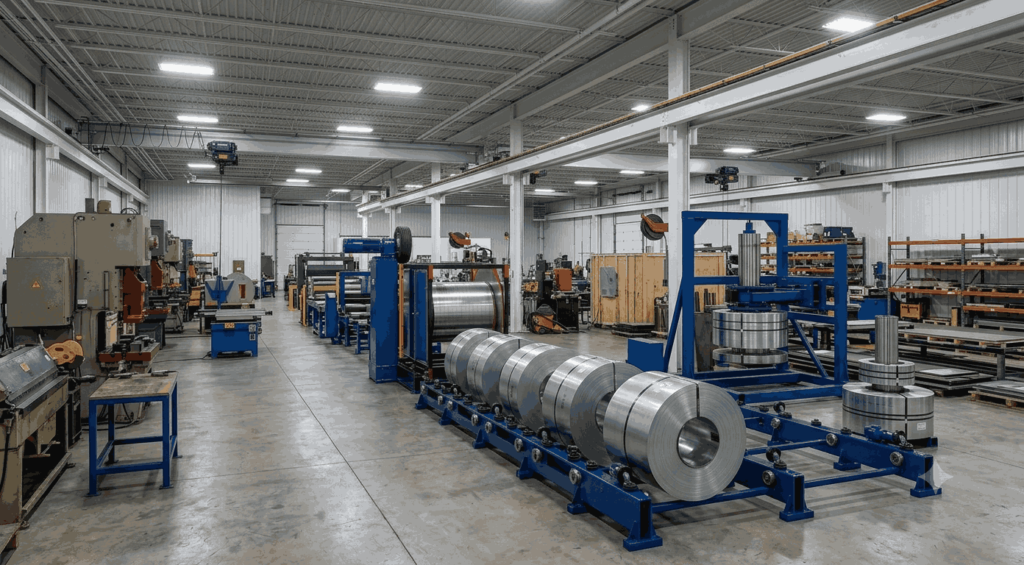
A coiler is a machine that winds processed material onto a coil. It is used at the end of the production line, after the sheet metal has been cut, stamped or processed. The coiler receives the continuous strip and transforms it into a compact, stable coil, ready for storage. An uncoiler, on the other hand, is a machine that unrolls (unwinds) the initial coil, feeding the material into the production line. It is the first step in the manufacturing process.
The choice between a standard coiler and an upcoiler depends on the thickness and nature of the material: for thin sheet metal (< 3 mm), a traditional coiler is sufficient; for thick sheet metal (> 5 mm) or when working with difficult-to-process metals, the upcoiler offers better control and reduces the risk of damage to the material.
Workshop safety: risk assessment and applicable regulations
Safety when handling and storing coils is not a matter of choice, but a legal obligation. Legislative Decree 81/2008 (Consolidated Law on Safety) and the INAIL guidelines clearly define companies’ responsibilities, the mandatory procedures and the penalties for non-compliance.
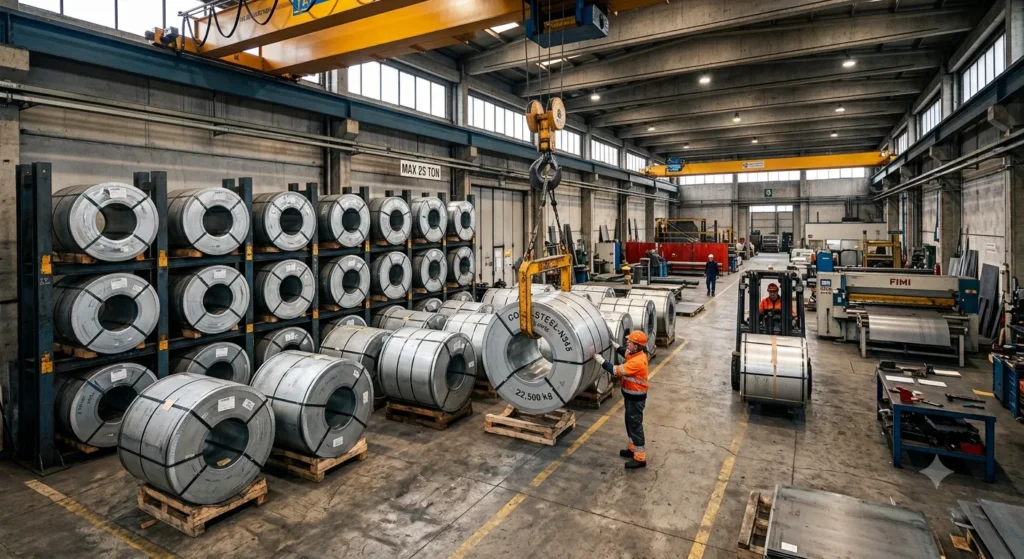
The main risks include: crushing and compression when an operator positions themselves beneath or beside a moving coil (risk of serious fractures or death), the cradle tipping over if the centre of gravity shifts during asymmetrical unwinding, fingers or hands being severed whilst inserting the mandrel or removing packaging; inhalation of metal dust when aluminium coils are handled in poorly ventilated areas; and falls from height whilst working on multiple storage levels.
Preventive measures require an integrated approach:
- Specific training for operators: 16–24 hours initially + annual refresher courses, with documentation and record-keeping
- Definition of safety zones: a minimum distance of 2 metres from the loading area to separate pedestrian areas from mechanical traffic routes
- Mandatory PPE includes cut-resistant gloves (EN 388), safety footwear with metatarsal protection, and high-visibility vests
- Regular maintenance of all equipment, with inspections every 12 months for cranes and checks every 6 months for slings
- A written risk assessment for each workstation, documentation of procedures, and records of accidents and near-misses
A serious accident must be reported to INAIL within 24 hours. Failure to comply exposes the company to significant administrative penalties, production stoppages and, in the event of a serious accident, criminal liability on the part of management.
Common problems in the handling and storage of coils
Even with the best procedures in place, accidents and damage to materials can still occur. Learning from common problems helps to prevent future accidents and optimise processes.
Deformation of the coil during lifting
When a coil becomes deformed during lifting, the cause is often an unevenly distributed gripping system. If the magnet, clamp or hook is not centred evenly, the load becomes unbalanced and deforms. The solution is simple: always check the centre before lifting, opt for balanced systems (such as self-centring magnets) and ensure that the weight does not exceed the equipment’s load capacity.
Rapid oxidation of coils in storage
Rapid oxidation is almost always a problem caused by humidity. If the relative humidity in the warehouse exceeds 70 per cent, or if ventilation is insufficient, the coils will start to oxidise within a few weeks. We install hygrometers in storage areas to monitor conditions constantly and, if necessary, activate dehumidifiers. Place silica gel sachets directly on top of the coils and ensure at least three air changes per hour to prevent moisture build-up.
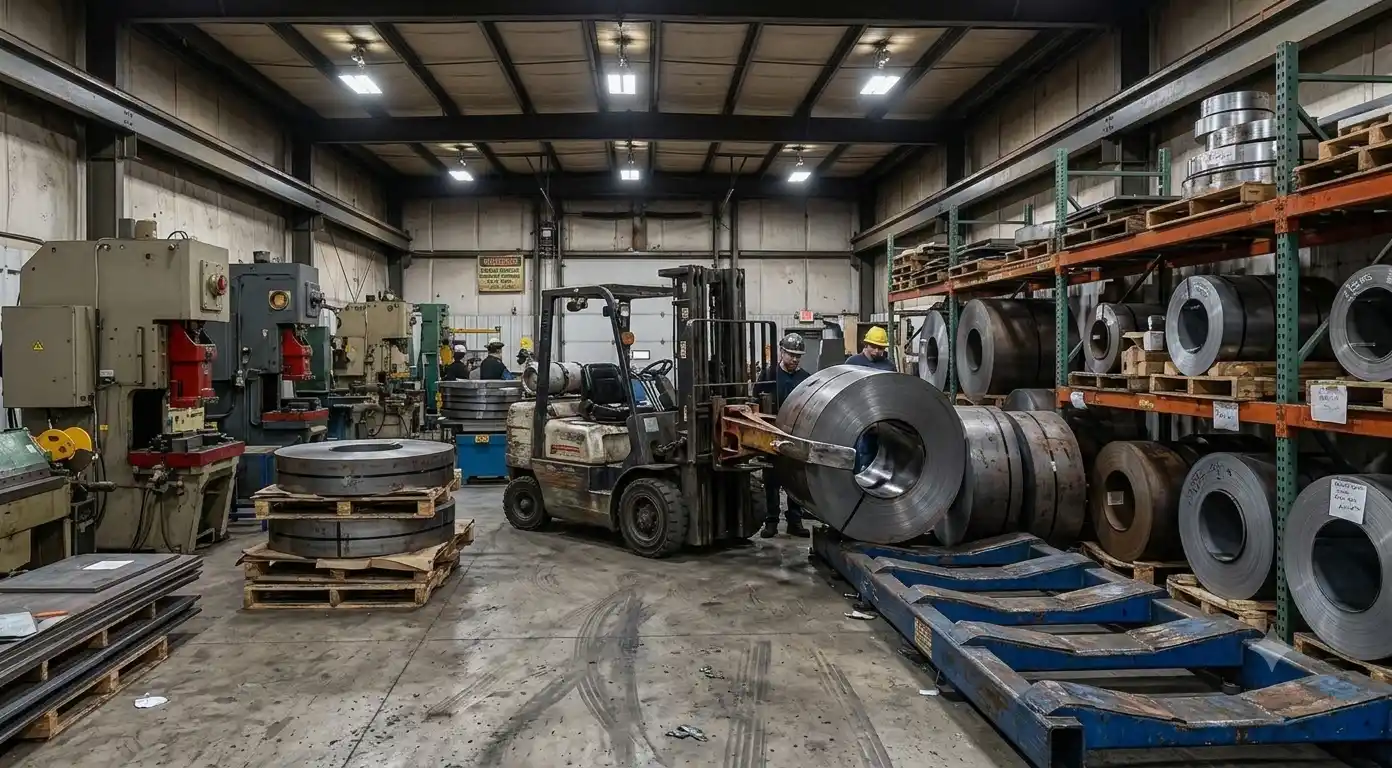
Dangerous swaying during lifting
Swaying during lifting is a warning sign: it means that the movement is too fast, the load is unbalanced, or the equipment is unsuitable. Reduce the speed to a maximum of 0.5 m/s, check the balance before every lift, and consider intelligent anti-sway systems (cranes fitted with sensors that automatically detect imbalances). Staff in the area will be safer.
Scratches on the surface of stored coils
Scratches occur when the coil comes into contact with sharp edges or rough surfaces. If your cradles have sharp edges, cover the contact points with protective rubber or nylon. Inspect the cradles regularly for signs of wear, and if possible, switch to modular systems with rounded profiles: this will keep the material in good condition for longer.
Advanced technologies in coil handling
In 2026, coil logistics management is becoming increasingly automated. Modern technologies reduce human error, optimise operational efficiency and provide real-time data for decision-making.
RFID and IoT systems enable comprehensive tracking: an RFID chip attached to the coil transmits its location, weight, material and arrival date to a central system. This eliminates picking errors, enables setup times to be calculated automatically, and generates reports on stock rotation (FIFO). Vibration sensors fitted to cradles and supports detect anomalies in real time; if a coil begins to sway or the cradle becomes unbalanced, the system immediately alerts the operator.
Smart cranes equipped with load sensors, cameras and anti-sway systems automatically slow down their final movements to prevent impacts and dangerous swaying. The camera provides a top-down view, eliminating ‘blind spots’ and reducing ‘near-miss’ incidents. Logistics planning software integrated with the MES (Manufacturing Execution System) automatically suggests which coil to pick up, from which position, and to which production line to transport it.
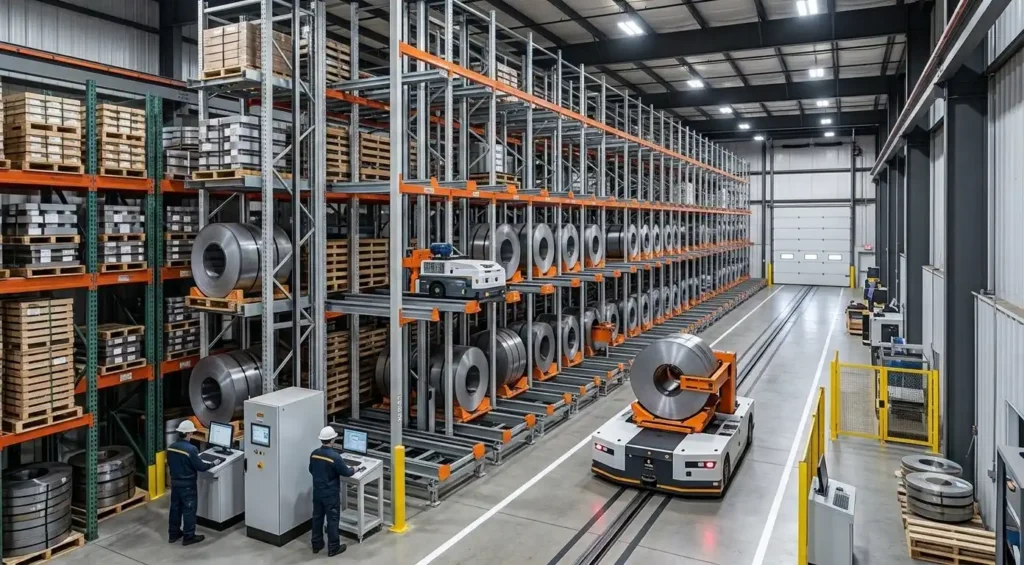
Automated warehouse systems using motorised shuttles or self-propelled trolleys, designed to balance the centre of gravity, handle coils without human intervention. These systems require a significant initial investment, but offer an exceptional return on investment: a 90% reduction in accidents, a 20–30% increase in productivity, and a 40% reduction in warehouse space.
Best practices and integrated solutions for the safe handling of coils
Safe coil logistics is not a cost, but a strategic investment. Companies that have implemented modern storage, automation and training systems have seen measurable results: a 70–90% reduction in accidents, a 15–20% increase in productivity (fewer stoppages due to accidents), and a 25% reduction in set-up times (thanks to digital traceability).
In recent years, intelligent coil handling has become a key competitive advantage. Companies with optimised processes attract customers who require safety and sustainability certifications. Furthermore, a safe working environment improves staff morale and retention, a critical factor in a metalworking market facing a shortage of talent.
Elmea has 70 years experience in designing complete sheet metal processing lines, from motorised uncoiling systems to optimised storage and final safety checks.
If your workshop has not yet modernised its coil logistics, now is the time to act. Contact us for a personalised consultation, we will analyse your current situation and design a solution that combines safety, efficiency and regulatory compliance.
Do you have any questions about the storage and processing of coils? Request a consultation with our experts. We’ll help you identify the risks in your workshop and suggest solutions tailored to your specific situation. |
READ MORE:
https://elmea.eu/en/blog/how-to-handle-mesh-rolls-using-motorised-winders-and-unwinders/
https://elmea.eu/en/blog/motorised-winders-and-unwinders-how-to-handle-mesh-rolls-safely/